Fuel is expensive, EVs are back in demand, and a home charger costs less than you think
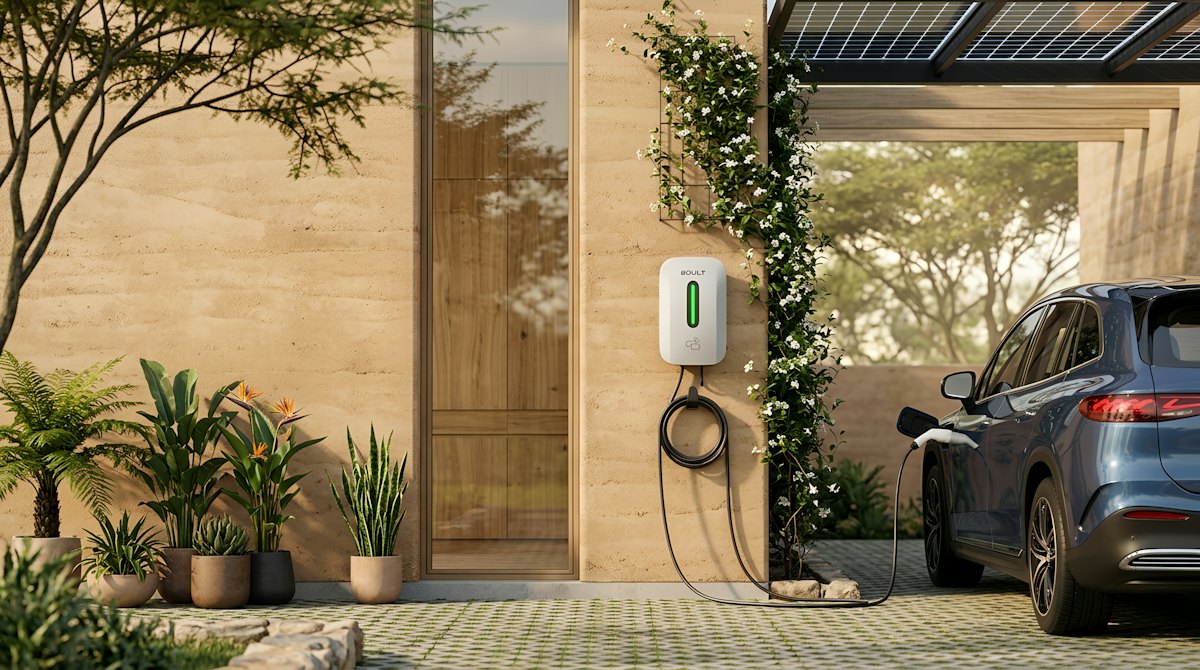
I drive an electric car. I also run a contracting company that installs home chargers, so I hear the same worries every week: the install is a huge job, the car takes eight hours to charge, the battery will die, and it all costs too much. Some of that was fair a few years ago. Most of it is not true today, and with fuel prices where they are, a lot of Londoners are doing the math again. Here is what I have learned as an owner, and what we see on the install side.
Why demand turned around this year
Two things happened at once. First, fuel got expensive. Statistics Canada reported gasoline prices up 27.8% year over year in September, with crude at its highest since May amid the wars in the Middle East. Diesel has been hit harder: the national average set a record of $2.751 a litre in September, as damaged refineries and shipping in the Middle East and Ukrainian strikes on Russian refineries squeezed global diesel supply. If you drive a diesel truck for work, you have felt it at every fill.
Second, the federal rebate came back. The Electric Vehicle Affordability Program started February 16, 2026 and pays up to $5,000 on a battery electric vehicle with a final transaction value under $50,000, stepping down $1,000 a year through 2030. The data shows the swing. In the first quarter of 2025, after the old rebate ran out, zero emission vehicles fell to 8.7% of new registrations, a 54% drop from the quarter before. By August 2026, Statistics Canada counted 22,716 zero emission vehicles sold, up 55.1% from a year earlier, for 13.0% of all new vehicle sales.
Why you may be waiting for the car
Demand has outrun supply for the popular models. On October 12 Tesla paused orders for the Shanghai built Model 3 Premium in Canada, saying demand had exhausted its import quota, with ordering expected to resume in March 2027. The quota exists because Canada agreed in January to let in 49,000 Chinese made EVs a year at the normal 6.1% tariff instead of the 100% surtax. In fairness, Global Affairs Canada's tracker showed most of that quota still unused in October, so Tesla's explanation has been questioned. Either way, you cannot order that car today, and the Model Y, which reaches Canada from Germany, was showing delivery windows several months out by mid summer.
Myth one: installing a charger is a big, expensive job
It is a job for a licensed electrician, no exceptions. Ontario law requires a Licensed Electrical Contractor, who files a notification of work with the Electrical Safety Authority before starting; ESA then issues a Certificate of Acceptance once the work meets the Ontario Electrical Safety Code. For the homeowner that is paperwork the contractor handles. What you are actually paying for is simpler than most people think:
The charger is the biggest line, and it does not need a Tesla badge. Any Level 2 charger will do, as long as it carries the mark of a certification agency that ESA recognizes, such as CSA, UL or Intertek. That is the one real warning about a cheap charger from an online marketplace: installing unapproved electrical equipment is against the law in Ontario, and no licensed electrician will connect it. Look for the mark before you buy. Beyond that, Chinese factories are building some excellent electric cars, and I would have no problem with a certified charger from the same place.
The second line is the wire. Copper is the expensive part, so the cost depends on the distance from your panel to where the car parks. Then you need space in the panel for a two pole breaker, and the panel has to be in sound, code compliant shape. If you have a 100 amp service and the load calculation is tight, the code has allowed an EV energy management system since 2018: a device that throttles the charger when the rest of the house is busy, so the charger does not count against your service and you may avoid a panel upgrade.
With an unfinished basement this is one of the easier electrical jobs there is: the wire runs from the panel along the joists and out through the garage or exterior wall to the charger. With a finished basement it takes a few holes in the drywall to fish the wire through, which we patch and paint as part of the job. Either way it is usually one visit.
Myth two: it takes eight hours to charge, so the car is useless
People see "zero to one hundred in seven hours" and picture themselves stranded. That is not how you live with the car. You plug in at home at night, the way you charge your phone, and leave every morning full. Most of us drive less than we think: the median one way commute in Canada is 8.7 kilometres, and Transport Canada's traffic figures work out to roughly 17,000 kilometres a year per vehicle, under 50 kilometres a day. On Ontario's Ultra Low Overnight plan, 3.7 cents per kilowatt hour from November 1, a night of charging costs a few dollars.
The long trip is the real question, so here is mine. I took my Model Y, rated at just over 500 kilometres, from London to a site visit in Brampton. Highway driving uses more energy than the rating assumes, and about 230 kilometres each way by my route was not going to happen on one charge. Here is the part people get wrong: you do not stop and charge to 100%. The car knows how much energy it needs to get home, so on the way back I pulled into a fast charger in Tillsonburg, plugged in, used the washroom, and walked back to a car with enough to get me home with margin. About five minutes. Independent testing backs this up: in CAA's winter test, at minus 7 to minus 15, a Tesla Model 3 added 205 kilometres of range in 15 minutes.
Myth three: the battery will need replacing
This one is years out of date. Recurrent, which tracks more than 30,000 EVs, reported in November 2025 that under 4% of all EVs have ever had a battery replaced outside a recall, and for 2022 and newer models the figure is 0.3%. Tesla's own Impact Report data shows Model 3 and Model Y batteries losing about 15% of capacity on average after 320,000 kilometres, and Tesla says packs are replaced for damage or failure, not capacity loss, which it calls very rare. In Canada the Model Y battery and drive unit carry an 8 year, 160,000 to 192,000 kilometre warranty with at least 70% capacity guaranteed.
Myth four: EVs cost far more to buy
I used to say this too. It is less true now. J.D. Power put the average transaction price of a new EV and a new gas vehicle in Canada at the same $49,500 in the first quarter of 2026, with the compact SUV gap down from $15,000 in 2023 to about $3,000. That excludes direct sellers like Tesla, and some models still carry a premium, but add the rebate and a few years of fuel savings and the gap mostly disappears.
My take
If you live in London or St. Thomas with a driveway or a garage, an EV with a Level 2 charger at home is the easiest car I have ever owned. The exceptions are real but small: if you tow across the country or spend weekends truly off grid, range still matters, and for that one trip a year, renting a vehicle is cheap. For a homeowner, or a landlord running between properties, the car is full every morning and the fuel bill is a rounding error. The charger install is the smallest part of the decision. Get it done properly, with the ESA paperwork, and forget about it.
Before you order a car or a charger
- Check the panel first. A photo of your panel and the amperage on the main breaker is enough for us to tell you whether you need a load management device or an upgrade.
- Buy a certified charger. Look for the CSA, UL or Intertek mark, whatever the brand. The portable cord that comes with the car is a backup, not a plan.
- Measure the run. Where the car parks and where the panel sits decides the wire cost. A charger on the garage wall beside the panel is the cheapest install there is.
- Insist on the ESA notification and keep the Certificate of Acceptance. Your insurer may ask for it.
- Switch your hydro plan to Ultra Low Overnight and set the car to charge after 11 pm.
- Order early. With popular models months out, start the car and the charger at the same time.
Thinking about a home EV charger in London?
Send a photo of your electrical panel and your parking spot and we will quote the install, with a licensed electrician and the ESA notification included.
Statistics Canada, The Daily: Consumer Price Index, September 2026 (gasoline up 27.8% year over year, energy up 19.0%, crude at highest since May amid Middle East wars)
CP24, September 17, 2026: record national average diesel price of $2.751 a litre (Kalibrate), Middle East refinery and shipping disruption, Ukrainian strikes on Russian refineries
Drive Tesla Canada: Electric Vehicle Affordability Program (started February 16, 2026; up to $5,000; $50,000 final transaction value cap; annual step downs)
Electric Autonomy Canada: Statistics Canada Q1 2025 registrations (ZEV share 8.7%, 54% drop from Q4 2024)
Drive Tesla Canada, October 16, 2026: Statistics Canada new motor vehicle sales, August 2026 (22,716 ZEVs, up 55.1%, 13.0% share)
Canadian Auto Dealer, September 9, 2026: EV sales rebound, fuel prices and the federal rebate
Drive Tesla Canada, October 12, 2026: Tesla pauses Model 3 Premium orders in Canada, import quota, resume expected March 2027, Global Affairs quota tracker
Global Affairs Canada, January 16, 2026: Preliminary Joint Arrangement with China (49,000 EVs a year at the 6.1% tariff)
Drive Tesla Canada, July 28, 2026: Model Y delivery windows pushed to December 2026 and January 2027; Canadian units supplied from Germany
Electrical Safety Authority: EV charging stations at home (Licensed Electrical Contractor required by law, notification of work, Certificate of Acceptance, approved equipment, Section 86)
Electrical Safety Authority: Recognized approval marks (CSA, UL and ULC, Intertek and others; unapproved equipment is illegal to install)
IAEI Magazine: Electric Vehicle Energy Management Systems in the Canadian Electrical Code (Section 8 rules introduced in the 2018 edition)
iPhone in Canada, September 17, 2026: Tesla Wall Connector $815 and Universal Wall Connector $945 in Canada
Statistics Canada, The Daily, February 25, 2019: Long commutes to work by car (median commuting distance 8.7 km)
MyChoice, citing Transport Canada 2023 traffic statistics: about 17,000 vehicle kilometres per registered vehicle
Drive Tesla Canada, October 17, 2026: Ontario electricity prices from November 1, 2026 (Ultra Low Overnight 3.7 cents per kWh)
Drive Tesla Canada: Model Y Long Range RWD rated range in Canada (525 km)
CAA, February 10, 2025: winter EV range and charging test (14% to 39% range loss; Model 3 added 205 km in 15 minutes)
Recurrent, November 11, 2025: How long do EV batteries last (under 4% replaced outside recalls; 0.3% for 2022 and newer)
EV Specs on Tesla's Impact Report: Model 3 and Model Y batteries lose about 15% after 320,000 km; replacements very rare
Ingenext: Tesla Model Y warranty in Canada (battery and drive unit 8 years, 160,000 to 192,000 km, 70% capacity)
Auto123, May 8, 2026: J.D. Power Q1 2026 average transaction prices, EV and gas at $49,500; compact SUV gap down to $3,000
Canadian Auto Dealer, October 13, 2026: Chinese made EVs arriving in Canada under the quota
HW Contracting pricing is our own and is confirmed on site. This post is general information, not financial or legal advice.